
guides / NBA
How to Research NBA Rebounds Props
Check minutes before the matchup. Across 319 games of 21 NBA bigs in 2026-27, the over hit 60% at their usual minutes and 27% below them.
2026-27 regular season through games of November 23. Data checked
On this page
The short version
- Research an NBA rebounds prop by checking minutes first. Across 319 games of the 21 players with a rebounds line of 8.5 or more, the over hit 60% when the player reached his own median minutes and 27% when he did not.
- The opponent mattered less. Against the 10 defenses that allow the most rebounds to centers the over hit 48%, the same as against the middle 10, and 40% against the 10 that allow the fewest.
- The second night of a back-to-back (40% against 46%) and a final margin of 15 points or more (41% against 48%) both cut the over rate, mostly through minutes.
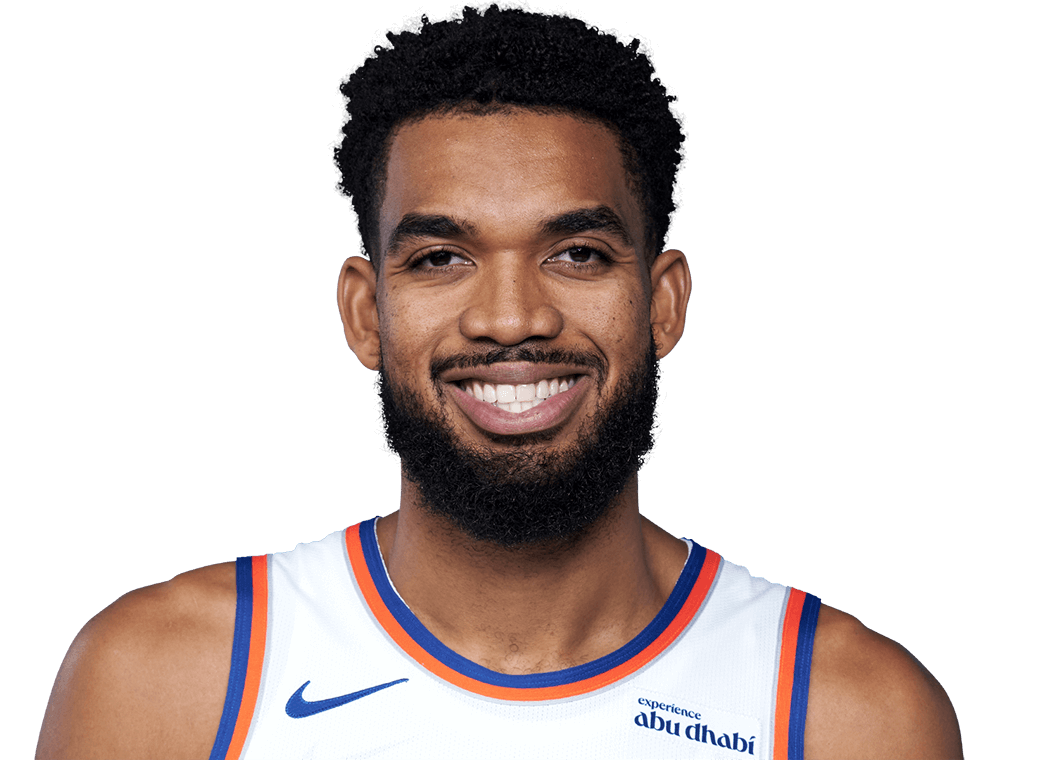
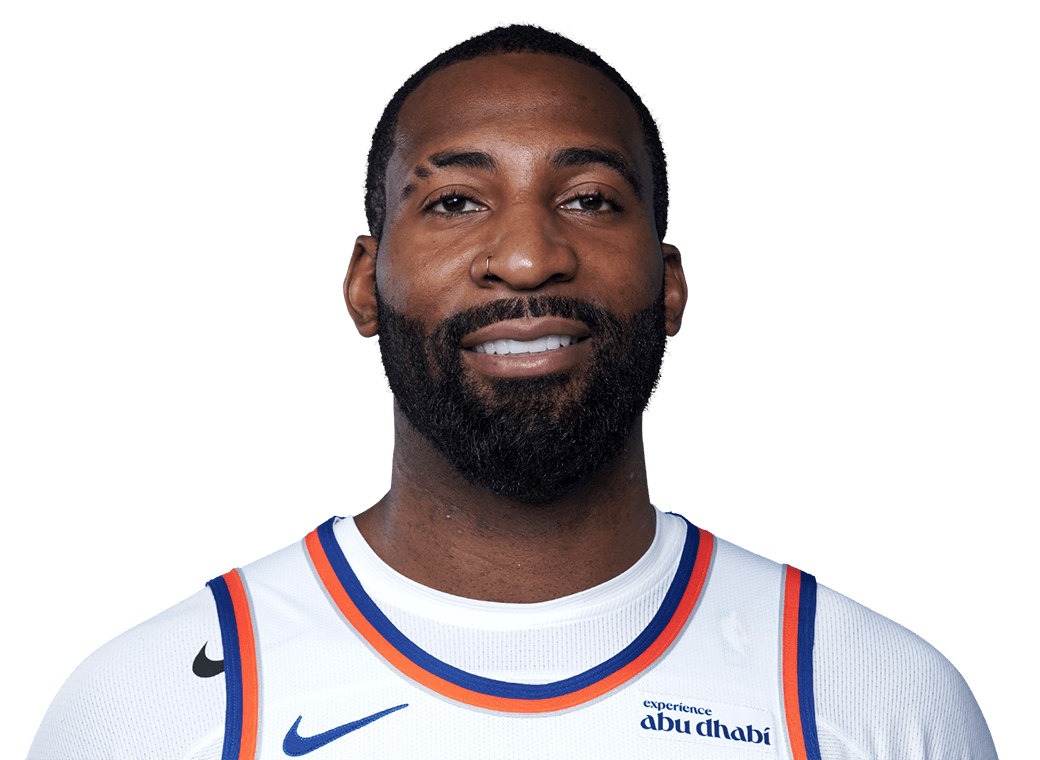
- Karl-Anthony Towns and Andre Drummond of the Knicks both carry a 12.5 line on StatPro. Towns went over in 10 of 16 games and Drummond in 3 of 17, because Drummond's line was posted for the one night Towns sat.
Start with minutes, then the matchup. Across the 319 games that the 21 NBA players with a rebounds line of 8.5 or more have played in 2026-27, the over hit 60% of the time when a player reached his own median minutes and 27% when he fell short. The opponent's rebounding defense, the column most of us open first, moved the same rate by about 8 points.
We did not expect the gap to be that wide. We set out to write the usual guide to a rebounds line (average, matchup, recent form) and pulled every big man's game log on StatPro to fill it in. The averages and matchups were there. What kept deciding the games was the minutes column, and the clearest case sits on one team.
Karl-Anthony Towns leads the NBA at 13.9 rebounds a game. His backup on the Knicks, Andre Drummond, averages 7.8. StatPro shows the same last posted line, 12.5, for both of them. One clears it most nights and the other almost never does, and the reason is a single night in November.
So here is what we'll argue: a rebounds line for a big man is a minutes line wearing a rebounds label. Before asking who he plays, ask how long he will be on the floor and whether the line was set for that role. We'll go through the two Knicks, then the 319 games, then the checks we would run in order.
One line, two Knicks
The two players share a team, a position and a number, and the number means different things for each.
| Player | Games | Over 12.5 | REB/G | Median REB | Median MIN |
|---|---|---|---|---|---|
| Karl-Anthony Towns | 16 | 10 of 16 | 13.9 | 13 | 33.5 |
| Andre Drummond | 17 | 3 of 17 | 7.8 | 8 | 14 |
Drummond's 3 of 17 comes from one night. Towns sat once this season, at home against Portland on November 21, and that is the night Drummond's line was posted for. He played about ten minutes more than usual, grabbed 13 rebounds and cleared the 12.5 posted for him. With Towns back the next night, he went under.
StatPro grades every game on a prop page against the last line posted, so a line set for a starter's night is now being measured against 16 nights as a backup. In those 16 games he averaged 13.4 minutes, so the count is correct and measures a backup against a starter's number.
Towns and the half rebound
Towns is the opposite case, with steady minutes and a line set just under his typical game.
His median game is 13, half a rebound over the line, and every one of his six unders landed between 10 and 12. That is what a line in the right place looks like. The misses are near misses, and the overs include a 20 against Detroit.
He is also where our claim is weakest. Split his season at his median minutes and he went over in 5 of 8 games on each side. His two shortest nights were unders, one of them a 30-point win over Chicago, but he also had 16 rebounds in 27 minutes against Milwaukee on November 10. A player who takes this big a share of the rebounds while he is on the floor loses less when a few minutes go missing. The rebound chances guide covers that share and how to read it from a box score.
What 319 games say
We took every player whose last posted rebounds line on StatPro was 8.5 or more on November 24, 21 players, and graded each game of his season against that line. Then we split the games four ways.
| Games where | Games | Over | REB vs line |
|---|---|---|---|
| He reached his median minutes | 178 | 60.1% | +0.9 |
| He fell short of them | 141 | 27.0% | -2.0 |
| Opponent in top 10 for rebounds allowed to centers | 113 | 47.8% | -0.1 |
| Opponent in middle 10 | 111 | 47.7% | -0.2 |
| Opponent in bottom 10 | 95 | 40.0% | -0.9 |
| Second night of a back-to-back | 47 | 40.4% | -0.8 |
| Any other night | 272 | 46.3% | -0.3 |
| Final margin of 15 or more | 101 | 40.6% | -0.7 |
| Final margin under 15 | 218 | 47.7% | -0.3 |
The minutes split is 33 points wide. Every other split is 6 to 8.
The matchup result surprised us more than the minutes one. A soft rebounding defense did nothing at all: 47.8% against the top 10, 47.7% against the middle. Only the stingiest defenses showed up, and even there the average game finished less than a rebound under the line. The back-to-back and blowout rows look like the same thing seen from the side, since bigs played about two fewer minutes in games decided by 15 or more.
The checks, in order
This is the order we would run them for a rebounds line tonight.
- Whose role is the line for? Open the player's game log and find the date of the last posted line. If it came on a night a starter sat, as Drummond's did, the hit rate under it is graded against a different job.
- Will he play his usual minutes? Check the injury report for teammates at his position (an absent starter raised Drummond from 13 minutes to 23), whether it is the second night of a back-to-back, and whether the game could get out of hand early.
- Where does the line sit against his median? Count the games over and look at how far the misses missed. Towns's six unders were all within 2.5 rebounds. How to read a prop hit rate covers what that count can and can't tell you.
- Then the matchup. NBA defense vs centers ranks all 30 teams by rebounds allowed to the position. In this sample, a tough rebounding defense showed up in the results and a soft one did not. Which NBA defenses allow the most to centers reads that table team by team.
The Knicks host Cleveland on November 25. The Cavaliers allow 12.1 rebounds a game to centers, third most in the league. Towns has played them twice this season, both times for 34 minutes, and had 13 and 11. That is a matchup to look at, and it shows why the table comes last. Cleveland is soft on paper, Towns played the same minutes both times, and the results still split.
FAQ
How do you research an NBA rebounds prop?
Check minutes first, then where the line sits against the player's median game, then the opponent. In 2026-27, a big man who reached his usual minutes cleared his line 60% of the time and one who fell short cleared it 27% of the time.
Do rebounds props depend on the opponent?
Less than most fans expect. Against the 10 defenses that allow the most rebounds to centers, the over hit 47.8% in our sample, the same as against the middle 10. Against the 10 that allow the fewest it fell to 40.0%.
Why does a player's rebounds hit rate look so low?
Often because the line was posted for a different role. StatPro grades every game against the last line posted, so a backup whose line was set on a night he started will look like an under every other night.
Do back-to-backs lower NBA rebounds?
In this sample, yes, a little. Big men went over in 40.4% of second nights of a back-to-back and 46.3% of other games.
What we'd do with a rebounds line
We now think of a big man's rebounds line as a forecast of his minutes with a rate attached. Three facts carry that: the 33-point gap between games at usual minutes and games short of them, a soft rebounding defense making no difference at all, and a 12.5 line that means a starter's night for one Knick and a backup's night for the other.
Before a game we'd check whose role the line was set for, what could cut his minutes (a teammate back from injury, a back-to-back, a lopsided game), and only then the defense. Towns is the warning against overdoing it, since his minutes barely mattered this season.
If, over a full season, the opponent's rebounding rank starts to split the over rate as widely as minutes do, we're wrong, and we'll say so when we refresh this post.
Lines, hit rates and game logs are from StatPro prop pages and game logs viewed November 24, 2026, covering 2026-27 regular-season games through November 23. Defense ranks are from StatPro's NBA defense vs centers table the same day. Splits are our calculation.
Try it on StatPro
Karl-Anthony Towns rebounds propHis last posted line, how often he cleared it, and every game of his season next to it.In this article

Sources
- StatPro Karl-Anthony Towns rebounds prop (viewed November 24, 2026) (opens in a new tab)
- StatPro Andre Drummond rebounds prop (viewed November 24, 2026) (opens in a new tab)
- StatPro Karl-Anthony Towns game log (viewed November 24, 2026) (opens in a new tab)
- StatPro Andre Drummond game log (viewed November 24, 2026) (opens in a new tab)
- StatPro New York Knicks team page and schedule (viewed November 24, 2026) (opens in a new tab)
- StatPro NBA defense vs centers, 2026-27 (viewed November 24, 2026) (opens in a new tab)
- StatPro 2026-27 NBA leaders (viewed November 24, 2026) (opens in a new tab)
- StatPro NBA props directory, and the rebounds prop page and game log of each of the 21 players in the sample (viewed November 24, 2026) (opens in a new tab)
- More in NBA props
- NBA
- rebounds props
- rebounds
- minutes
- defense vs position
- hit rate
Keep reading

NBA PRA props: points, rebounds and assists explained
A PRA prop adds a player's points, rebounds and assists. See the 2026-27 leaders and why minutes, more than the average, decide how often a total gets there.
NBA Defense vs Position (DvP): How to Read It for Props
What NBA defense vs position (DvP) measures, the 2026-27 guard table, and why the softest guard defense of November 5 ranks 21st over its last seven games.

What are rebound chances in the NBA? Chances vs rebounds
A rebound chance is a rebound a player was closest to, caught or not. The two formulas, and what Jokić and Hartenstein's 2026-27 box scores show without them.