
guides / NFL
What is target share in the NFL?
Target share is the percentage of a team's targets that go to one player. How to calculate it, what counts as high in 2026, and how it feeds receiving props.
2026 regular season, Weeks 1 to 10. Data checked
On this page
The short version
- Target share is a player's targets divided by his team's targets.
- For a wide receiver, 20% is a regular role, 25% is top 20 in the league and 30% is rare: five players were there through Week 10 of 2026.
- Use share in the games a player played. Season share understates his role when he has missed time.
- Share times team pass volume gives targets per game, the number a receiving prop starts from. CeeDee Lamb's share was five points below Jaxon Smith-Njigba's, and he still saw more targets per game.
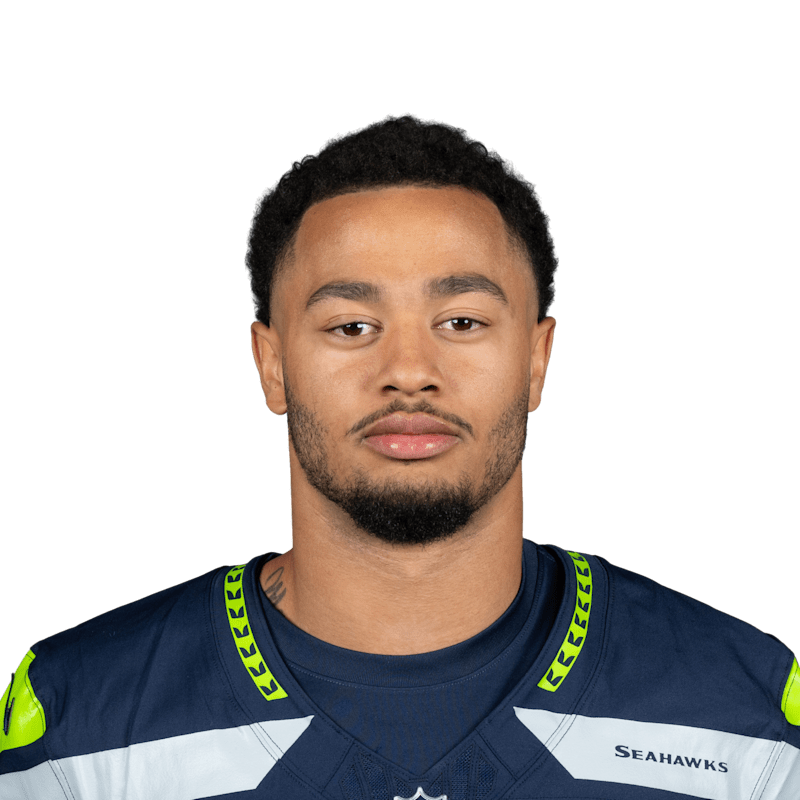
Target share is the percentage of a team's targets that went to one player: his targets divided by the team's targets. Through Week 10 of the 2026 regular season, Jaxon Smith-Njigba led the NFL at 37.1%, with 109 of the 294 passes Seattle threw at a receiver.
That is the definition, and most explainers stop there. We started from the same leaderboard and expected its order to tell us whose receiving numbers to trust. It didn't, quite. CeeDee Lamb sits five points behind Smith-Njigba and still sees more passes a game, and Smith-Njigba's biggest share of the season came on the day Seattle barely threw.
So here is what we'll argue: a share is a slice, and a slice of a small pie is still small. The percentage tells you who an offense trusts. The number of targets behind it tells you what that trust is worth on a given Sunday. We'll start with the arithmetic and the denominator that trips people up, then what counts as high in 2026, and then the two cases where the size of the pie mattered more than the slice.
How to calculate target share
Target share = player targets / team targets
We add up a player's targets over a stretch of games and divide once by his team's targets in the same games. Averaging his weekly shares gives a different answer, because the average lets a quiet week count as much as a busy one.
Season share or share in games played
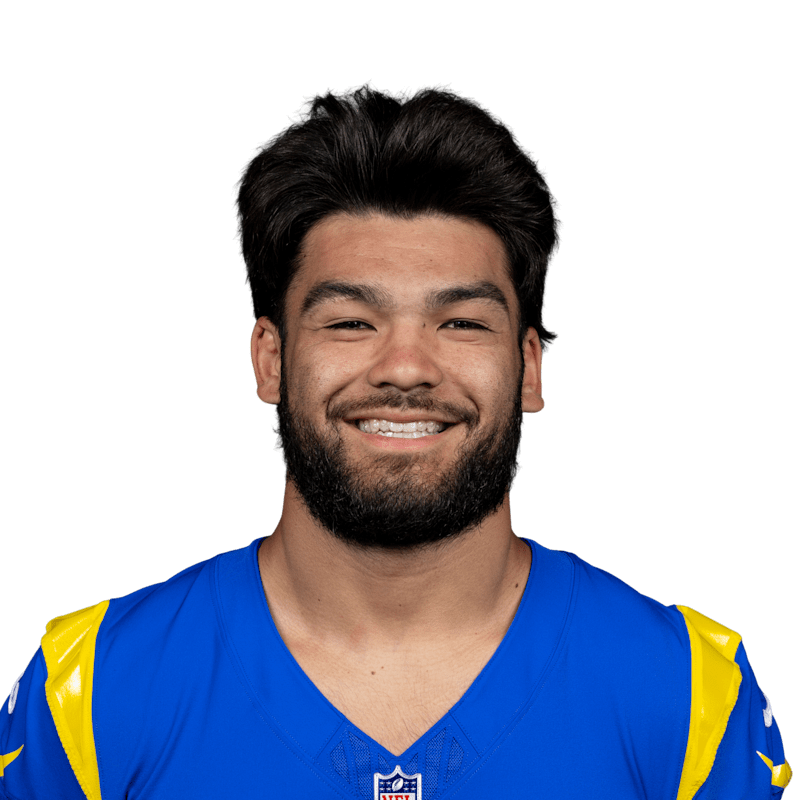
The denominator was the first thing that surprised us. Puka Nacua had 93 targets in 7 games through Week 10, while the Rams threw 363 targets across all 10 of their games. Divide by the whole season and he looks like a good receiver. Divide by the games he played and he is the second most targeted player in football.
| Denominator | Team targets | Nacua's share |
|---|---|---|
| All Rams games | 363 | 25.6% |
| Only the 7 games Nacua played | 258 | 36.0% |
Season share answers how much of the Rams' year went through him. Share in games played answers what his role looks like when he is on the field, which is the question a reader brings to a game he is expected to play. We use share in games played for the rest of this post.
What counts as a high target share
Among the 216 wide receivers and tight ends with at least six games through Week 10 of 2026, only five reached 30%. A receiver at 25% is already in the top 20.
| Target share in games played | Players |
|---|---|
| 30% or more | 5 |
| 25% or more | 19 |
| 20% or more | 37 |
| 15% or more | 74 |
The top of that list is the slice at its biggest, and it is where the pie starts to matter. Position changes the scale too: the leading tight end, Trey McBride, was at 27.5% of Arizona's targets, and the leading running back, Christian McCaffrey, at 19.1% in his 9 games. No other back reached 18%.
The quiet week that looked loud
We expected Smith-Njigba's best week by share to be his best week, full stop. His weekly share ran from 29.6% in Week 5, 8 of 27, to 58.8% in Week 10, 10 of 17.
On a chart, Week 10 looks like Seattle handing him the offense. It wasn't. Seattle threw only 17 targets that day, and his 10 were close to his season average of 10.9. The slice got bigger because the pie shrank.
That is the one habit we'd keep from this post: read a one-week jump in share next to the team's total for that game. A high share on a 17-target day and a high share on a 45-target day are different signals, and only one of them says his role changed.
Share and volume in receiving props
A receiving yards or receptions line starts from how many targets a player is likely to see, and that number is his share times how often his team throws.
| Player | Share in games played | Team targets per game | Targets per game |
|---|---|---|---|
| Jaxon Smith-Njigba | 37.1% | 29.4 | 10.9 |
| CeeDee Lamb | 32.1% | 37.7 | 12.1 |
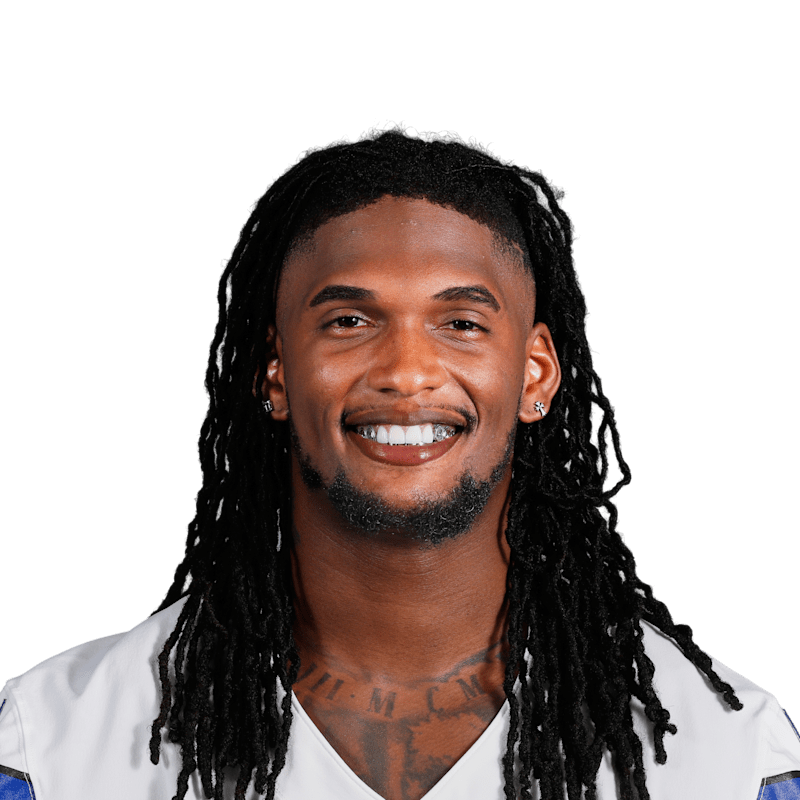
Lamb's share is five points lower, and he still averaged more targets per game, because Dallas threw 377 targets in 10 games, the most in the league. A smaller slice of a bigger pie is more pie.
From targets, catch rate turns volume into receptions and yards per catch turns receptions into yards. Smith-Njigba caught 72.5% of his targets for 15.3 yards per catch, and Lamb caught 63.6% for 12.7, so the efficiency edge is Seattle's even where the volume edge is Dallas's. The NFL receiving props guide walks through that chain, and the NFL props directory shows each player's game-by-game results against the current line.
What target share misses
- Depth. A 10-yard target and a 40-yard target count the same. Air yards measure how far downfield the passes travel.
- Routes. Share does not say how often a player was on the field running a route. A part-time player with a high share per route can show a modest team share.
- Who is out. When a teammate is injured, his targets go to someone else, so a share built with him in the lineup can change in one week. Comparing recent games with the season average is the check for that.
- The defense. Some defenses allow far more to one position than others. Check NFL defense vs wide receivers for the opponent.
FAQ
What is a good target share in the NFL? For a wide receiver, 20% is a regular role, 25% is top-20 territory and 30% is rare: five players reached it through Week 10 of 2026. Tight ends and running backs run lower.
Is target share the same as air yards share? No. Target share counts passes. Air yards share counts how far those passes traveled, so a deep receiver can have a higher air yards share than target share.
Should I use season target share or share in games played? For a game a player is expected to play, use share in the games he played. Season share counts the team's targets in games he missed, so it understates his role whenever he has sat out.
Does target share include running backs? Yes. Every player who is thrown a pass counts toward the team total, including backs and fullbacks.
What we'd do with a target share
We'd still open a receiver's target share first, because nothing else says as quickly who an offense is built around. We just wouldn't read it alone anymore. Two facts changed our minds while writing this: Lamb seeing more passes than Smith-Njigba from a smaller slice, and Smith-Njigba's biggest week coming on Seattle's quietest day.
Before a game we would check three things: his share in the games he played, how many targets his team throws a game, and whether a missing teammate is inflating either one. If receivers with big shares on low-volume teams start seeing more targets than receivers with smaller shares on pass-heavy teams, week after week, then the slice matters more than we gave it credit for here, and we'll say so when we update this post.
Stats from the nflverse weekly player stats file for the 2026 regular season through Week 10, downloaded November 20, 2026. Player target, reception and yardage totals were checked against StatPro player pages the same day.
Try it on StatPro
NFL props todaySee each receiver's line next to his game-by-game results.In this article
Sources
- nflverse-data release stats_player, file stats_player_week_2026.csv (downloaded November 20, 2026) (opens in a new tab)
- nflreadr data dictionary: player stats (opens in a new tab)
- StatPro Jaxon Smith-Njigba player page (viewed November 20, 2026) (opens in a new tab)
- StatPro Puka Nacua player page (viewed November 20, 2026) (opens in a new tab)
- StatPro CeeDee Lamb player page (viewed November 20, 2026) (opens in a new tab)
- More in NFL props
- NFL
- target share
- targets
- receiving props
- nflverse
Keep reading

How to Research NFL Receiving Props
Targets are the steadiest number behind a receiving prop. 2026 data on catch rate, yards per target and why a receiver's average game is often above his typical one.
How to Adjust a Pregame Model for Injuries
In 2026, NFL players listed questionable have played 67% of the time. How to turn that into a pregame rating adjustment, and what the tag leaves out.
Why does my fantasy football team keep losing? 7 fixes
Most losing fantasy football teams were built on last year's point totals. Seven fixes, with 2026 examples from Malik Nabers, Brian Thomas Jr. and Puka Nacua.